
BIOPROCESS ENGINEERING AND TECHNOLOGY
PREPARED AS PER NEP 2020 GUIDELINES FOR UNDERGRADUATE AND POSTGRADUATE STUDENTS
AUTHOR(S) –
Dr. SAMTA SHUKLA
DOI –
10.5281/zenodo.20677781
Book Code – WPH062601
pgs: 320
ISBN(P) – 978-81-687262-0-8
ISBN(E) – 978-81-687262-1-5
Published – 02/06/2026
Edition – 1st Edition

Dr. SAMTA SHUKLA
Dr. Samta Shukla is a distinguished microbiologist with over 17 years of academic and research experience in the field of Applied and Medical Microbiology. She holds a Ph.D. in Medical Microbiology from S.S. Medical College, Rewa, and completed her M.Sc. in Microbiology from Dr. H.S. Gaur University, Sagar (M.P.). She also possesses a Diploma in Medical Laboratory Technology (DMLT) and has qualified the ICAR-NET examination.
Dr. Shukla is currently serving as Faculty at the Centre for Biotechnology and Microbiology Studies, APS University, Rewa. Throughout her academic career, she has actively contributed to teaching, research, and student mentorship, guiding numerous postgraduate dissertations and doctoral scholars.
Her scholarly contributions include 15 research papers published in reputed peer-reviewed and refereed journals, two book chapters, and one patent to her credit. She is the author of "Fundamentals of Microbiology: Concepts and Applications" and co-author of "Herbal Medicine: A Promising Tool Against Pathogens." She has also contributed as a co-author to the book "Microbiology and Microbial World," reflecting her commitment to advancing microbiological education and scientific understanding."
Her research interests focus on innovative diagnostic and therapeutic strategies in medical microbiology, with special emphasis on emerging microbial challenges and plant-based antimicrobial approaches. Through her research and academic endeavors, she continues to promote excellence in microbiological sciences and inspire the next generation of researchers.
Dr. Shukla remains dedicated to advancing scientific knowledge, fostering innovation, and nurturing future scholars in the field of microbiology.
About Book
Bioprocess Engineering and Technology is a comprehensive academic resource designed to provide students, researchers, and professionals with a strong foundation in the principles and applications of modern bioprocess engineering. The book bridges the gap between microbiology, biotechnology, and engineering by presenting the scientific concepts and industrial practices involved in the production of biological products.
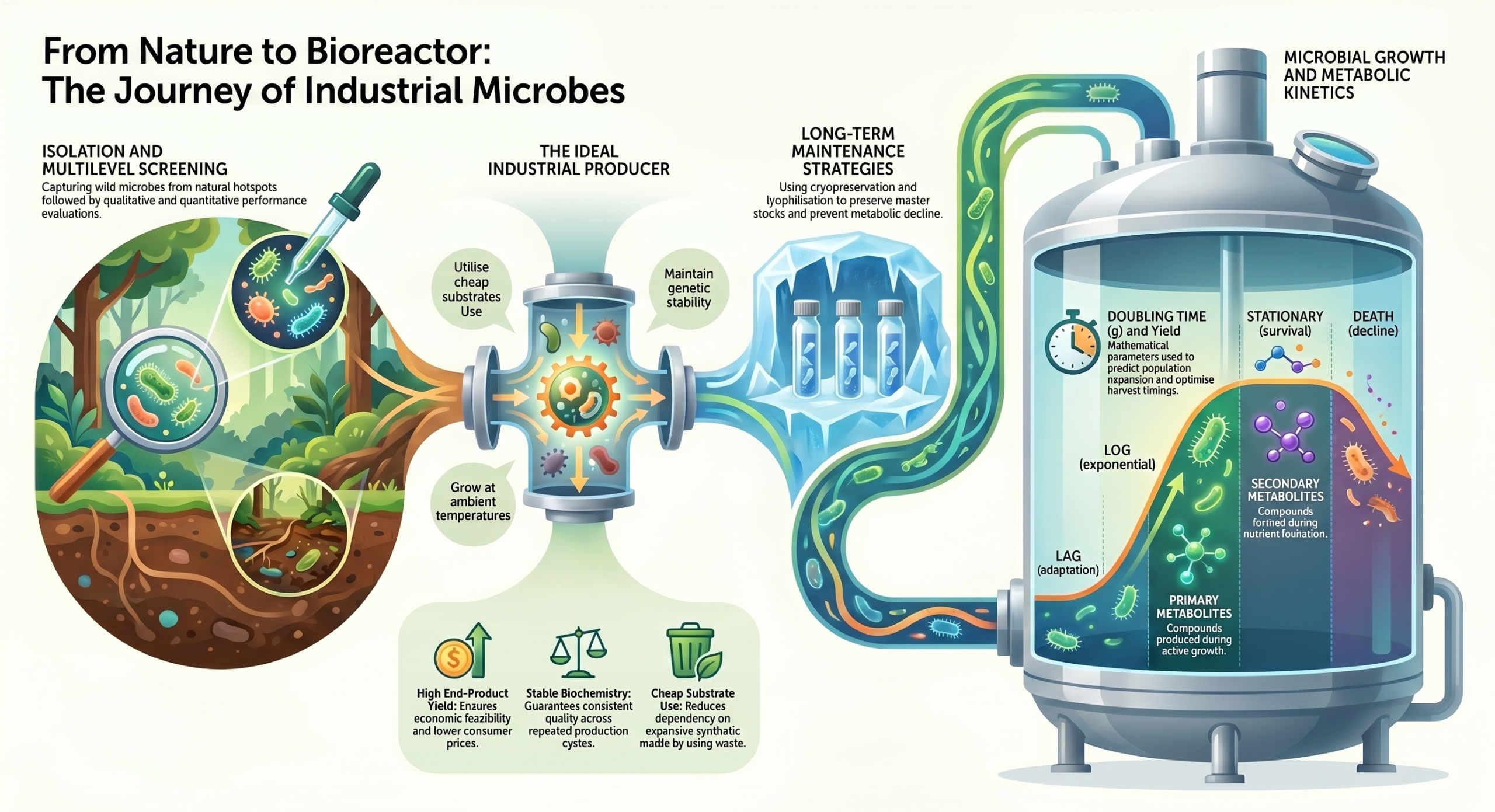
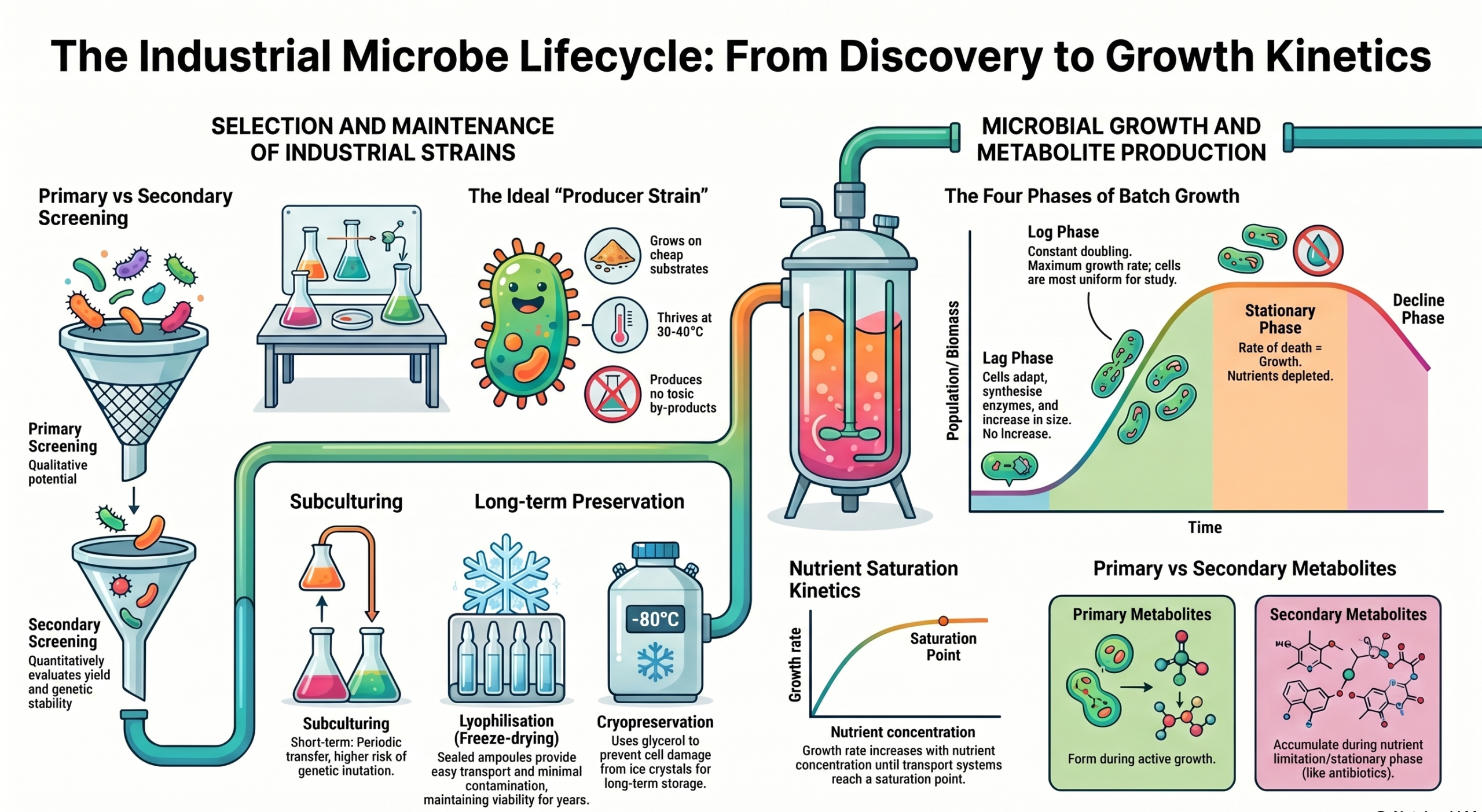
Beginning with microbial fundamentals and strain development, the book explores the selection, cultivation, and improvement of microorganisms used in industrial biotechnology. It then examines fermentation technology, bioreactor design, and process optimization, highlighting the engineering principles that govern large-scale biological production systems.
The text further covers downstream processing techniques, including product recovery, purification, storage, and waste management, which are essential for ensuring product quality and economic viability. Special emphasis is placed on the applications of enzymes and microorganisms in food processing, illustrating their role in enhancing product quality, safety, and efficiency.
The final sections focus on enzyme technology and industrial applications, including enzyme production, immobilization, biotransformations, and biosensor technologies. Real-world industrial examples and practical insights are integrated throughout the book to demonstrate how bioprocess engineering contributes to sectors such as pharmaceuticals, food technology, agriculture, environmental management, and biotechnology.
With its balanced approach to theory and application, this book serves as a valuable guide for undergraduate and postgraduate students, educators, and industry practitioners seeking a deeper understanding of bioprocess engineering and its growing significance in the bioeconomy.
UNITS
Unit 1: Microbial Fundamentals and Strain Development
This unit introduces the biological foundations of bioprocess engineering. It covers microbial cultures, industrial microorganism selection, growth kinetics, and strain improvement techniques used to enhance productivity and process efficiency.
Unit 2: Fermentation Technology and Bioreactor Design
This unit explains the principles of fermentation processes and bioreactor operation. It discusses different fermentation methods, fermenter designs, process control, scale-up strategies, and large-scale cultivation systems used in biotechnology industries.
Unit 3: Downstream Processing and Product Recovery
This unit focuses on the recovery and purification of bioproducts after fermentation. Topics include separation techniques, extraction methods, purification processes, drying, storage, packaging, and environmental management of industrial waste.
Unit 4: Enzymes and Microbial Applications in Food Processing
This unit explores the role of enzymes and microorganisms in food production and preservation. It highlights enzyme-catalyzed processes, fermented foods and beverages, food additives, and industrial applications that improve food quality and processing efficiency.
Unit 5: Enzyme Technology and Industrial Applications
This unit covers enzyme production, recovery, immobilization, and scale-up techniques. It also examines industrial applications of enzymes, microbial biotransformations, and emerging technologies such as enzyme-based and cell-based biosensors used in modern biotechnology.